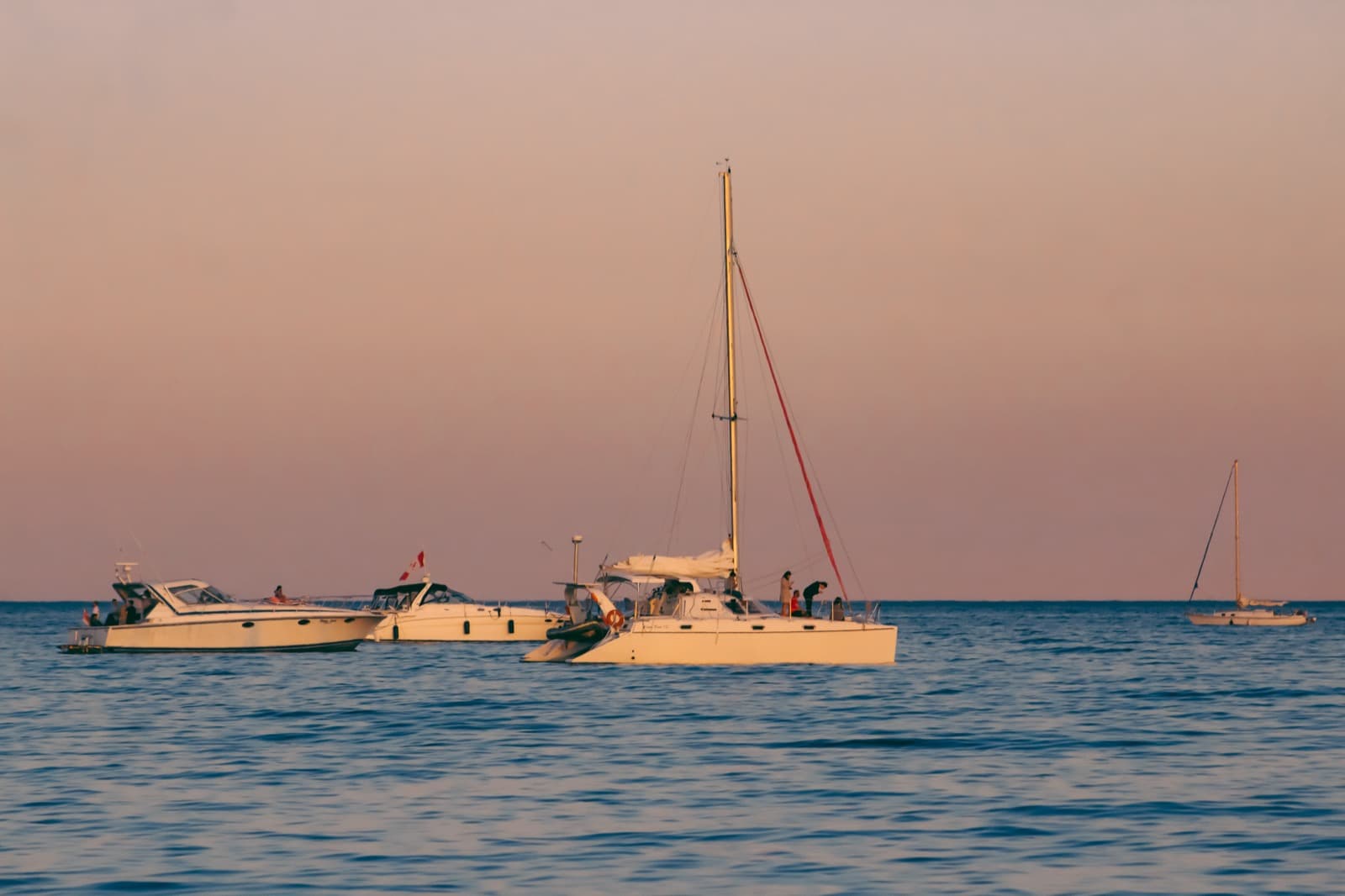
Toronto Harbour's inner waterways demand careful attention to no-wake regulations, particularly along the western gap near Lake Shore Boulevard where the harbour transitions from recreational boating corridors to sensitive shoreline habitats. The inner harbour, stretching from Bathurst Street eastward past the Toronto Islands, enforces strict 10 km/h speed limits within 150 metres of shore—a critical measure protecting both erosion-prone coastlines and the thousands of paddlers, kayakers, and dragon boaters who frequent these sheltered waters. Boaters approaching from the western gap must reduce speed well before reaching the inner harbour's designated zones, where the wake from vessels can damage moored boats, destabilize small craft, and disturb the sediment beds that support the harbour's improving aquatic ecosystem.
The Outer Harbour presents distinct navigational challenges, with no-wake zones concentrated around the Leslie Street Spit and Tommy Thompson Park—a 5-kilometre peninsula renowned among birdwatchers and anglers for its biodiversity. Vessels traversing the Outer Harbour must observe reduced speed approaching the Ashbridges Bay Yacht Club (ABYC) and the surrounding breakwall areas, where confined waters amplify wake impacts on both infrastructure and nesting habitats along the artificial headland. The channel leading past Woodbine Beach and the RC Harris Water Treatment Plant requires particular vigilance; summer traffic converges here with kayakers accessing the wetlands, and enforcement by Toronto Police Marine Unit remains active throughout the boating season with fines for non-compliance reaching substantial penalties under Canada Shipping Act regulations.
Understanding the geographic boundaries of Toronto's speed restrictions protects both your vessel and your wallet. The eastern gap, separating Ward's Island from the Outer Harbour entrance, functions as a critical chokepoint where no-wake protocols extend across the entire channel width during peak summer weekends. Boaters heading toward the ABYC basin or exploring the industrial heritage waters near the Port Lands must reference current Canadian Hydrographic Service charts (CHS 2043), as temporary no-wake zones frequently accompany construction of the Port Lands Flood Protection project and ongoing waterfront revitalization. Whether departing from downtown marinas or accessing Lake Ontario through these historic harbour mouths, respecting Toronto's wake and speed regulations preserves these waterways for the diverse communities—recreational, commercial, and ecological—that depend upon them.